Operations
Buy the Commodity, Build the Moat
By Better Software · Tue Jul 28 2026 · 9 min read
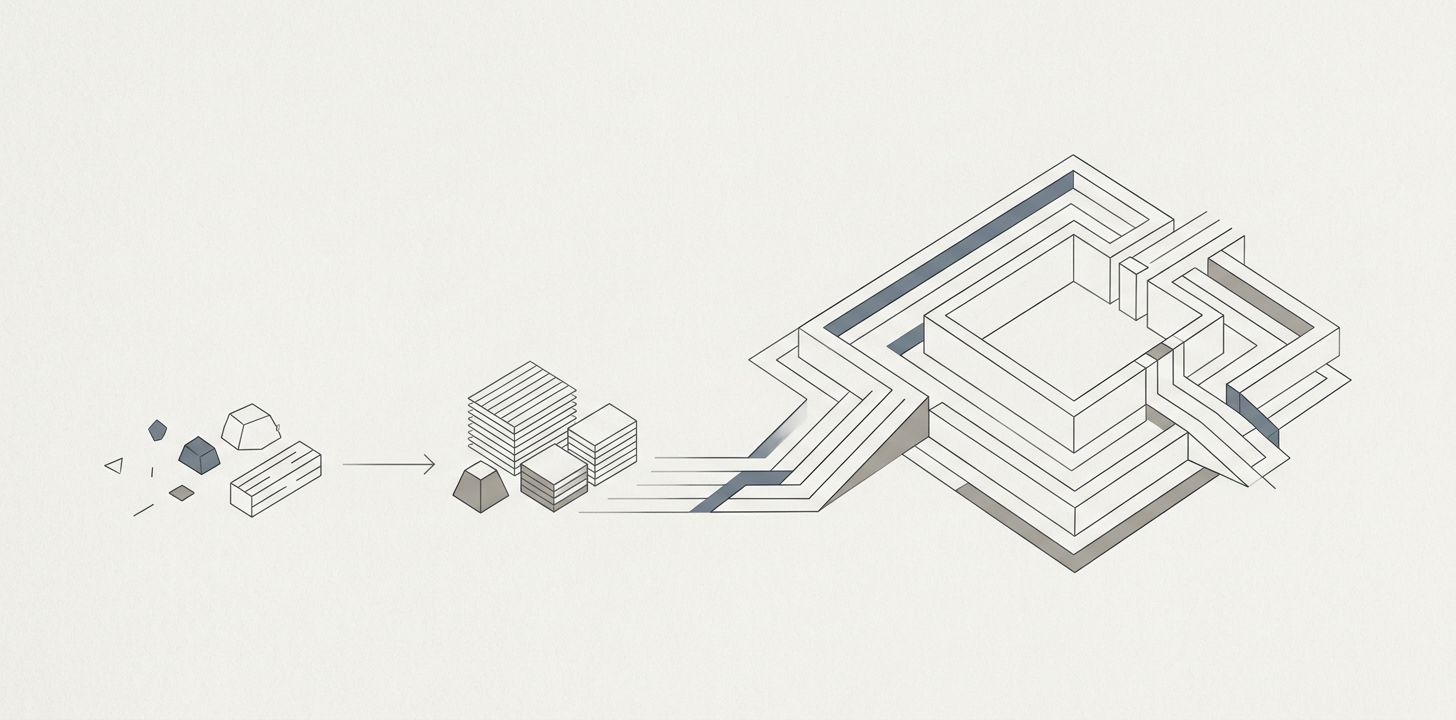
Buy the commodity. Build the moat. That is the only rule that matters when software stops being a back-office expense and starts shaping how your business wins. If a system is table stakes, buy it. If it encodes how you operate, differentiate, or compound margin, build it.
For accomplished operators, the question is no longer whether software exists for the job. It is whether the software is generic enough to rent, or strategic enough to own. That is the real build vs buy software decision.
Why this decision looks different in 2026
The math has changed, but the judgment has not. AI-assisted development has lowered the cost of getting to a scoped first version, which means custom software is no longer reserved for the largest enterprises. At the same time, SaaS pricing has become less predictable: renewals climb, usage-based billing expands, and “unexpected cost” is now a common line item rather than an exception. In one Zylo survey, 76.6% of IT leaders reported unexpected costs.
That does not mean “build” is suddenly better. It means the threshold for building has moved. A scoped, well-governed custom system can now be economically rational sooner—especially for operators whose workflows are unusual, regulated, or tightly tied to margin. But the failure rate on bad custom builds has not disappeared. McKinsey and Oxford have long reported that large software projects frequently run late, over budget, and under-deliver value. The lesson is not “never build.” The lesson is “build only when the asset can compound.”
That is why the right question is not build or buy software. It is: when does a build become a moat instead of a maintenance burden?
The Moat Test: five questions that decide it
Use this build vs buy decision framework on any system you are evaluating this week. If you answer “yes” to three or more, custom software deserves a serious look.
1) Would customers or margins care if this software were meaningfully better?
If the answer is no, buy it. Payroll, general CRM, accounting, expense management, and basic ticketing rarely differentiate the business. Better software does not change the offer. It only changes the vendor.
If the answer is yes, the system may be part of the product or the operating model. In a dental group, scheduling, patient flow, and treatment coordination can directly shape revenue per chair. In an energy business, field ops and dispatch can change asset utilization. In logistics, exception handling can decide whether margin survives the week.
2) Is the workflow how you win, or how everyone operates?
Some processes are universal. Others are the reason you outperform. If your workflow is mostly standard, custom software vs off the shelf usually tilts toward buying.
If your process is a source of leverage—how you price, route, prioritize, coordinate, approve, or reconcile—then a generic tool will eventually force your business to conform to someone else’s assumptions. That is where companies quietly lose edge: not in a dramatic failure, but in a thousand small compromises.
3) Have you outgrown the workaround stack?
The real signal is not “we need something nicer.” It is “we have built an operating system out of spreadsheets, Zapier scripts, shared inboxes, and tribal knowledge.”
That is the swivel-chair stage. Data lives in five places. The team retypes the same information. Managers make decisions from stale exports. One person understands the process because one person built the workaround. At that point, the off-the-shelf tool is no longer a fit; it is a constraint.
4) Can you own it for five years—and who actually owns the code?
Many operators ask whether they can afford to build. Fewer ask whether they can afford to own. Ownership means more than receiving a login and a demo. It means the codebase, architecture, data model, and deployment process are transferable and inspectable. It means your business is not held together by one vendor’s roadmap or one contractor’s availability.
If the vendor controls the source code, release process, or critical data structures, you do not own the system. You rent a more expensive dependency.
5) Does the economics survive honest maintenance math?
Custom software is not a one-time purchase. The initial build is only the first chapter. You will pay for bug fixes, enhancements, security updates, performance work, monitoring, and the inevitable edge cases that emerge after real users touch the system.
The maintenance line is where many “build” cases fail. If the software is truly strategic, maintenance is justified because the asset compounds. If it is merely convenient, the ongoing cost becomes a tax.
A practical rule: if the five-year total cost of ownership looks worse than buying by a wide margin, the case for building must be very strong on strategic grounds. If you cannot explain the upside in margin, control, or customer experience, do not build.
What the SERP will not tell you
Most search results on build vs buy software pros and cons are not neutral. They are written by vendors with a preferred outcome.
| Who ranks | What they sell | Likely bias |
|---|---|---|
| No-code and low-code vendors | Platforms to assemble workflows on their stack | Build on us |
| SaaS vendors | Subscription software with broad use cases | Buy first |
| Dev shops and custom studios | Engineering capacity and project delivery | Build more often |
| Analyst and thought-leadership content | Frameworks, not delivery | Usually buy for standard use cases |
That bias is not evil. It is just structure. But it means the operator searching build vs buy in the ai era is usually being fed a decision by someone who benefits from one answer.
The gap in the market is judgment: a framework for non-software operators whose businesses have outgrown the generic tool, but who do not want a fragile custom system that becomes a rewrite waiting to happen.
When buying is obviously right
Buy when the process is commodity, the market is mature, and the penalty for standardization is low.
- Payroll: compliance-heavy, standardized, and not a differentiator.
- Accounting: buying is almost always the rational default.
- CRM: unless your sales motion is unusual enough to create a real edge, the platform matters less than adoption.
- Basic HR and expense tooling: the business value sits in execution, not invention.
On our 30-minute calls, we tell prospects this plainly: if the software does not change how you compete, do not build it. Rent the commodity and put your energy into the part of the business that actually moves the P&L.
If you build: the standards that make custom software an asset
“Build” only works if the result is durable. That requires discipline from day one.
1) Start with the data model, not the screens
The data model is the business logic made explicit. If you get it wrong, every feature becomes harder. If you get it right, workflows, reporting, automation, and integrations become easier to extend. Good custom software begins with how information should exist in the business, not how a form should look.
2) Demand senior review on architecture and code
AI can accelerate implementation, but it does not replace judgment. Every meaningful build should have senior engineers reviewing architecture, critical paths, and design tradeoffs. This is how you avoid a fast pile of brittle code.
3) Require automated testing with enforced coverage
Tests are not bureaucracy. They are how you keep growth from breaking the system. Unit, integration, and end-to-end tests should be part of the delivery standard, not an optional cleanup task. If your team cannot change code safely, you do not have a product—you have a liability.
4) Put observability and deployment discipline in place
You need logging, metrics, alerting, and a clear CI/CD pipeline. When the system fails—and it will—you should know where, why, and how badly. Quiet software is not good software. Visible software is manageable software.
5) Make code ownership explicit
The customer should own the code, the repo, the infrastructure accounts, and the deployment rights. Documentation should be complete enough that the system can be handed off without institutional memory trapped in one person’s head. Better Software’s open-source flask-react-template and Engineering Handbook exist for exactly this reason: to make the standards inspectable, not hidden behind a pitch deck.
Two operators who built their moat
Sunny Energy needed more than a generic workflow tool as it scaled. The business required custom operations software that matched how teams planned, executed, and tracked work in the field. The result was not just a prettier interface. It was an operating layer that supported 5x growth without forcing the company back into manual coordination.
Apex Dental faced a different version of the same problem. Across 45+ practices, the challenge was not whether there was software available. It was whether the software could support the way the organization actually managed scheduling, patient flow, and practice-level operations. A purpose-built platform gave the business ownership over its operating model instead of dependence on a generic tool.
These are not stories about “tech for tech’s sake.” They are examples of software becoming part of the moat because the workflow itself was strategic.
A working demo is not a working product
This is the AI-era trap. A prototype can now be produced quickly, and that is useful. But a demo is only the beginning. The real question is whether the system can survive production use, changing requirements, new users, and the ordinary entropy of a real business.
AI lowers the cost of the first version. It does not lower the cost of poor architecture, weak testing, or bad ownership. In fact, it can hide those problems for longer, which is why disciplined review matters more than ever.
The goal is not to ship something impressive in a week. The goal is to own a system that remains valuable in year five.
The 30-minute answer
If you are deciding between build vs buy software, use this sequence: run the Moat Test, do the maintenance math, then audit the standards behind any proposed build. If the answer is still unclear, the decision is probably not urgent enough to justify custom work yet.
And if the answer is clearly build, make sure you are buying execution against a standard, not a promise. The moat is not the code alone. It is the combination of a real business advantage, a clean data model, senior judgment, and ownership that compounds over time.
Buy the commodity. Build the moat. Everything else is just software procurement with better branding.