Operations
The Referral You Already Won: Why Groups Leak Referrals
By Better Software · Tue Sep 15 2026 · 8 min read
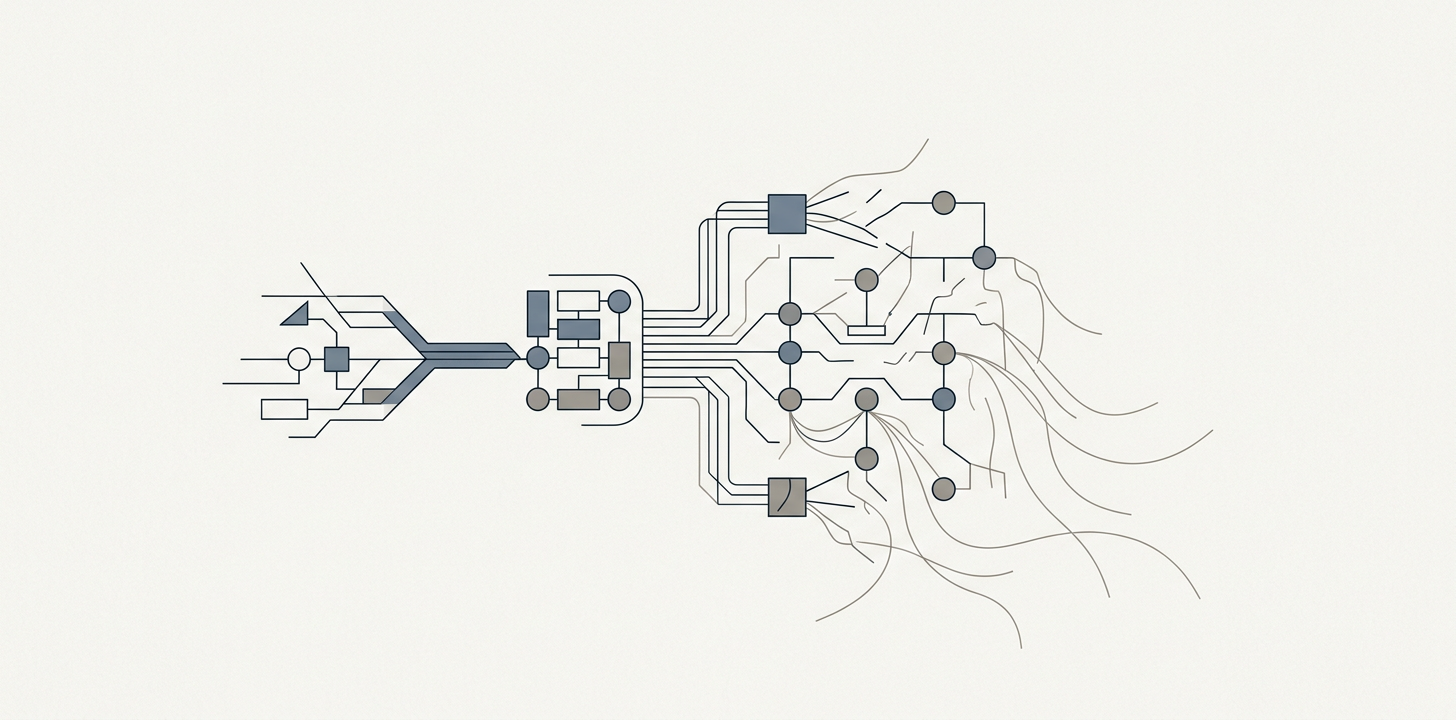
The referral your group already won is the one your own provider generated, your own specialty chair could have filled, and your organization still let walk out the door. That is not a marketing miss. It is margin leakage on capacity you already own.
The metric that matters here is internal capture rate: the share of referrals your group generated that were ultimately completed inside the group. It is different from inbound referral conversion, which measures how many outside referrals you manage to win. Most software in this category is designed for the second problem, not the first.
If you run a multi-location dental group, DSO, specialty platform, or clinic network with more than one EHR or PMS, that distinction matters immediately. A vendor can improve intake. It cannot tell you, on its own, what percentage of the implant, endo, ortho, or imaging cases your group referred internally were actually captured inside the group.
The two referral economies
There are two completely different referral economies hiding under the same word.
- External inbound referral conversion: patients or cases referred to you by outside providers, where the question is how many you convert.
- Internal capture rate: patients or cases generated inside your own group, where the question is how many you keep inside your own network.
| Referral economy | Who this is for | Metric | Why 1 point matters | Tools that help |
|---|---|---|---|---|
| External inbound | Specialty practice competing for outside volume | Referral conversion rate | More new demand from sources you do not control | Referral management software, intake automation, outreach |
| Internal capture | Multi-location group with owned specialty capacity | Internal capture rate | Revenue retained on volume you already paid to generate | Cross-system ledger, reporting layer, exception workflow |
That second row is the one most vendor pages skip. For a group that has bought the specialty chair, a referral that leaves the group is not just a missed opportunity. It is a second loss: the originating visit created the demand, and the downstream procedure revenue went elsewhere.
Why internal capture is invisible
It is invisible for structural reasons, not because teams are careless.
- The referring location and receiving location are often on different PM or EHR systems after acquisition.
- “Referral” is frequently a note, a phone call, a fax, or a printed slip, not a structured record.
- There is usually no shared rule for when a referral is closed.
- Leadership can report production by chair, but not the share of internally generated cases that stayed inside the group.
That means the ledger does not live cleanly in any single system of record. If you are looking at a vendor feature table and asking whether it “integrates with our EHR,” you may be asking the wrong question. The real issue is whether any one system can see both ends of the handoff across multiple systems, locations, and specialties.
In an acquired group, the number you need usually does not exist in one system. The work is defining it consistently, then reporting it across the systems you already run.
Measure it before you buy anything
Before you evaluate referral management software, create a baseline from data you already have. Do not try to measure the whole enterprise at once. Measure one procedure family first: implants, ortho consults, endo retreatments, imaging, infusion starts, whatever best fits your network.
A practical baseline method for this quarter
- Pick a procedure family with obvious internal referral traffic and enough volume to matter.
- Pull referral-out events from the referring locations. Use referral codes, procedure codes, provider notes, call logs, fax cover sheets, or referral work queues if they exist.
- Pull first completed visits for the same patient cohort at the receiving locations.
- Match patients across systems using your best available identity method: MRN if shared, then demographics, then manual review for edge cases.
- Classify each case into one of four buckets: captured in-house, out-of-network by plan, patient declined, or capacity-driven leakage.
A defensible baseline is not perfect. It is directionally reliable, repeatable, and honest about its exceptions. If you cannot explain why a case did not stay in the group, you do not yet have an internal capture metric; you have a guess.
The common traps are predictable. Patient matching across systems can overcount or undercount if demographics are messy. Some cases legitimately leave the group because the patient’s plan is out of network. Some are clinically appropriate referrals out. Those should not be labeled leakage. What you are trying to isolate is the volume the group could have fulfilled but did not.
The five places a referral actually dies
Most leakage happens before anyone calls it leakage.
- Generated but never recorded. The clinician intended a referral, but nothing was entered.
- Recorded but never routed. The referral exists in a note or inbox, but no one owns the handoff.
- Routed but never scheduled. Capacity, payer constraints, or slow follow-up stop the case.
- Scheduled but never completed. The patient no-shows or drops out before visit completion.
- Completed but never closed back. The downstream visit happened, but the referring provider never gets a closed-loop result.
That last stage matters more than people think. If the original provider cannot see closure, the same referral pattern gets repeated, repeated leakage becomes normal, and leadership still cannot measure capture rate accurately.
What platform categories actually do
Not every platform category is wrong. Most are simply solving a different problem.
| Platform category | Solves well | Cannot solve well | Integration burden | Who owns the data |
|---|---|---|---|---|
| EHR/PMS-native referral module | Local workflow inside one system | Cross-system capture across acquired locations | Low inside one stack, high across many stacks | Vendor system of record |
| Dedicated referral network platform | External referral intake and routing | Internal capture ledger across your own locations | Medium to high, especially with legacy systems | Vendor platform |
| AI intake and outreach layer | Fax intake, parsing, patient follow-up at volume | Defining your closure rule or ownership metric | Medium | Vendor workflow layer |
| Group-owned internal referral ledger | Cross-system capture, closure, reporting | Fax intake at scale, patient outreach automation | Higher upfront, lower strategic ambiguity | You |
That last row is the point. If the question is “can we handle more faxed referrals and route them faster,” a platform is often the right answer. If the question is “what percentage of our own specialty referrals stayed inside the group last quarter,” the group needs its own ledger and its own definition of closure.
Build vs. buy: the decision criteria
Use these criteria before you sign anything.
- Number of distinct PM/EHR systems: if referrals cross several systems, no single native module will give you the full picture.
- Share of referrals that are internal: if a meaningful portion of your referral volume originates inside the group, internal capture deserves first-class reporting.
- Group-specific closure rules: if “closed” means something different by specialty, location, or payer, you need ownership of the rule.
- Owner-level reporting need: if leadership needs one roll-up across the platform, you need a layer above the systems of record.
Do not build the intake automation first. Do consider owning the ledger and the reporting layer. Intake is a workflow problem; internal capture is a measurement problem. Those are adjacent, but they are not the same.
For a useful example of the right kind of work, see how Better approached cross-system operations at Apex Dental Partners: the practical challenge in a group assembled by acquisition is often not adding another system of record, but creating the layer that defines the needed number consistently and reports it. That same operating model is part of how we work in healthcare.
If you build, build this first
Version one should be small and opinionated.
- A referral ledger keyed to patient and procedure
- A written closure rule
- One weekly exception list for unresolved cases
- One owner-level number on the dashboard: internal capture rate for a defined procedure family
What version one should not include: full CRM behavior, patient marketing, broad fax automation, or every specialty at once. If the first release cannot answer the ownership question clearly, it is too large.
FAQ
What is referral leakage in healthcare?
Referral leakage is when a patient or case that could have been completed within your network goes elsewhere. In a multi-location group with owned specialty capacity, that usually means internal revenue left the organization.
What is referral leakage?
More broadly, it is any lost handoff in the referral process. In your own group, the more important version is internal leakage: referrals your organization generated but did not capture inside the network.
What is the difference between referral tracking and referral management?
Referral tracking records what happened. Referral management adds routing, follow-up, scheduling, and closure. Neither automatically gives you a cross-system internal capture ledger.
How do you measure whether our referral management is working?
For inbound referral management, measure conversion, time to first contact, and completed visits. For internal capture, measure the percentage of internally generated referrals that complete inside the group, with exclusions for out-of-network plans and legitimate clinical referrals out.
Can referral management software integrate with our existing EHR?
Sometimes, yes. But integration alone does not solve the internal capture problem if your referring and receiving sites live in different systems. A vendor may move data; it may not create the ownership layer you need.
Does referral management software handle prior authorizations?
Some products do. That can help with scheduling and completion, especially in specialty settings. It still does not answer the core ownership question: how many of your own referrals stayed inside the group.
The right question is not whether your software can process referrals. It is whether your organization can see, with one agreed number, how much of its own specialty demand it kept. If you cannot answer that yet, you do not have a vendor selection problem first. You have a measurement problem.