Product
Before Building a Dental Operations Product, Test It at a Second Independent Group
Quick Answer
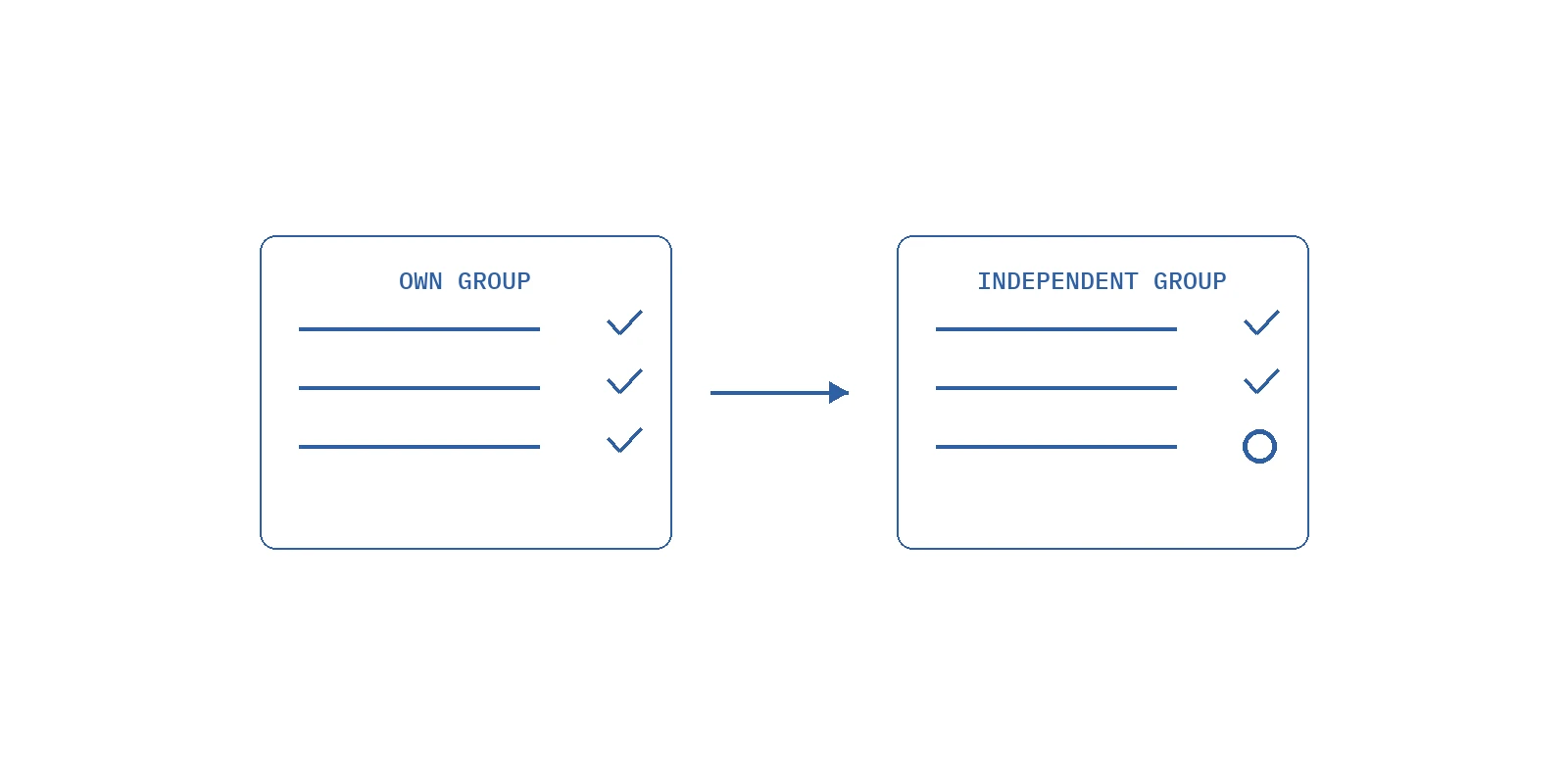
To validate dental operations software product demand, test one recurring operating decision at a second independent dental group before funding a broad build. The test should compare definitions, source access, user authority, onboarding effort, alternatives and buying evidence. A workflow that works at the home group may still depend on founder access, familiar data, internal pressure or integrations that another group will not repeat.
A dental operations software product means software that helps a group run recurring practice work, such as reporting discrepancies, access handoffs or weekly exception reviews. I see the risk when a workflow succeeds only because the home group already trusts the operator behind it.
Before we fund a broad build, we need to separate repeatable demand from home-company authority. I use a second independently run organization to compare definitions, access, user authority, support load, alternatives and buying evidence.
Validate Dental Operations Software Product Demand With One Weekly Decision
“Reporting for dental groups” is too broad to test when we need to validate dental operations software product demand. I would choose one decision with a recognizable user, input and next action. For example, which location needs an explanation for a discrepancy between its daily production report and the group report?
Write down what happens today. Who notices the discrepancy? Which records do they compare? What do they change, and who approves that change? How do they know the matter is closed?
If the answer changes by location, I write that down instead of smoothing it over. One owner, one source record and one closeout step give the pilot something concrete to prove.
The initial product hypothesis is that another group has the same recurring decision and would value a better way to make it. That hypothesis can fail even when both groups complain about spreadsheets.
Treat Your Home Group as Customer One
When we test a dental operations software product inside the home group, participation contains advantages that an outside customer will not automatically give you. Staff know your terminology. You can ask colleagues to change how they work. Someone remembers why an old exception exists. Access to source systems may already be arranged.
I list those advantages before the second demonstration. Otherwise, founder authority can look like product usability, and an informal data export can look like a repeatable integration.
This is where a dental software design partner should ask uncomfortable questions. Did the office manager comply because the workflow saved time, or because the request came from ownership? Did the data arrive cleanly, or did one trusted analyst repair it before anyone saw it?
I prefer an invented example or appropriately authorized, minimized information for early demonstrations. Do not share patient or employee records merely to make a prototype realistic. We establish the information-handling requirements before a real-data pilot.
Run the Second-Group Test
In the second-group test for a dental operations software product, we ask the second group to walk through a recent instance of the same decision. Let its operating lead explain the process before showing your solution. The important evidence is how the work is done, not whether a polite participant likes your interface.
For healthcare product work, I want the operator's sequence before the screen demo. Dental group product validation gets weaker when the software arrives first and the team tries to be helpful.
I ask for one recent example, not a perfect training case. If the second group cannot find the source report, cannot name who owns the next action, or needs three people to explain one exception, that confusion belongs in the evidence. It may be the product problem, or it may prove the problem is not narrow enough.
I also watch for hidden labor. Someone may export a CSV, rename columns, merge locations, remove inactive providers and then call the file normal. That is not just preparation. It is part of the workflow the dental operations software product must either absorb, avoid or price into onboarding.
The clearer sign is practical behavior. The operator corrects my label, asks how an unresolved item gets assigned, and wants to know who will maintain the definition next month. Those questions tell me the second group is testing work, not reacting to a polished demonstration. I write those observations while the call is fresh, because memory favors the demo.
Use this comparison:
| Question | What to record | Product implication |
|---|---|---|
| Does the metric mean the same thing? | Date basis, exclusions, adjustments and location attribution | A configurable definition, or a different product problem |
| Can the necessary records be accessed? | Actual vendor, permissions, export/API availability and commercial access | Integration feasibility and cost |
| Who may see and resolve a difference? | User roles and approval responsibilities | Permission model and operating ownership |
| Which exceptions recur? | Frequency, consequence and current resolution | First-release scope |
| Can another team learn the workflow? | Training needed and questions asked | Onboarding and support burden |
| Who would pay? | Budget owner, alternative and decision process | Commercial validation |
I do not collapse every difference into “we can customize that.” A configurable rule that many customers need is different from a separate implementation maintained for one company. If the second group needs a different date basis, approval role and vendor export, we may be looking at three product questions, not one preference.
Compare the Available Products Before Claiming a Gap
We compare existing products before we claim a dental operations software product gap. Dental Intelligence documents a multi-location performance board. NexHealth documents synchronization infrastructure intended to connect healthcare systems. These are reasons to inspect existing capabilities early, not reasons to assume the market is already solved or that integration is automatically available to you.
I ask the prospective customer to show the feature in the system it actually licenses. A missing configuration, training issue or unavailable subscription feature can look like a product opportunity from outside. We check vendor access and terms directly before treating an API as a reliable dependency.
The hard part is emotional, because the internal workaround often feels obviously better to the operator who invented it. I still want the competing screen, export, report and support path on the table before we write a product requirement.
Sources are Dental Intelligence multi-location documentation and NexHealth Synchronizer.
Calculate the Burden of Customer Two
I calculate the burden of customer two before calling a dental operations software product repeatable. Here is a hypothetical scoping example, not a market benchmark. Suppose the first group's setup takes two days because its data is already familiar. The second group needs five days to map definitions, four days to resolve access questions and three days of training and support. The difference changes both the offer and the delivery economics.
Separate reusable work from recurring work. A reusable import component may become an asset. A weekly manual correction performed by your founder remains a cost. Include support, vendor fees and the customer's own time in the pilot decision. Do not call an internal prototype a scalable product while these costs remain invisible.
I also separate setup pain from ongoing pain. A one-time mapping session may fit an implementation package. A weekly exception review that requires founder judgment probably belongs in the product logic, the service model or the stop column.
Define a Decision at the End of the Pilot
Before starting a dental operations software product pilot, we agree what evidence would support continuing. A useful small pilot might require the intended staff member to complete the weekly review without the founder operating the tool, explain unresolved differences from source records, and identify the accountable next action.
I also define what would stop the work. Examples include unavailable data rights, no meaningful advantage over existing software, a user who likes the tool but no budget owner who values it, or customer-specific changes larger than the common product.
The stop criteria matter because pilots tend to generate polite encouragement. I would rather hear that the product saves one regional manager 30 minutes but creates two new support questions than receive a vague request to keep improving it.
There are several legitimate outcomes. We might continue with a narrow repeatable product. We might provide a bounded implementation service, improve the internal tool for your own business, or stop. Choosing among those outcomes is the purpose of validation.
Bring Evidence to the First Product Conversation
To validate dental operations software product investment, we bring the two workflow maps, the differences table, confirmed access constraints, the alternative products evaluated and the pilot decision criteria. They are more useful than a long feature list.
I also bring the uncomfortable notes from the pilot. Which screen required explanation twice? Which permission request sat with a vendor? Which definition sounded standard until another group used a different cutoff? Those details keep the first product conversation grounded in operations instead of enthusiasm.
The next step is a working session around one repeated decision. We decide what is common across the two groups, what changes, and what evidence deserves another investment.
If the evidence points to a product, I want the next conversation to be about the smallest build that can survive customer two. Better Software can help turn that evidence into a product plan you can own.
Frequently Asked Questions
How long should a second-group pilot run?
I usually prefer one or two full operating cycles, because a weekly review behaves differently when month-end pressure arrives. A dental operations software product pilot should last long enough for the user to forget the demo and still complete the task without coaching.
What data should we prepare before inviting another dental group?
We prepare a sanitized sample, a field list and a clear note about what each field means. I want the second group to react to the decision logic, not wait while someone invents a safe way to discuss production, adjustments or location attribution.
Should the second group pay for the pilot?
I like some form of commitment, even when the first pilot is small. Payment is one signal, but time from an operating lead, access to real workflow detail and agreement on a specific end date also tell us that the problem matters.
Who should join the validation calls from the dental group?
We need the person who performs the work and the person who owns the operating result. For a dental operations software product, a clean demo to an executive can miss the queue, exception language and handoff that decide actual adoption.
What if the second group asks for a different workflow?
I treat that as evidence, not a failure. If the new workflow solves the same economic problem, we may have a broader product shape. If it depends on a local habit or one vendor setup, I would keep it outside the core release.
About the author
Better Software Team
Product and engineering team
Better Software Team is the product and engineering team at Better Software. We build custom software for established businesses in healthcare, energy and finance.