Product
How to Compare Custom Software Development Proposals Before You Commit
Quick Answer
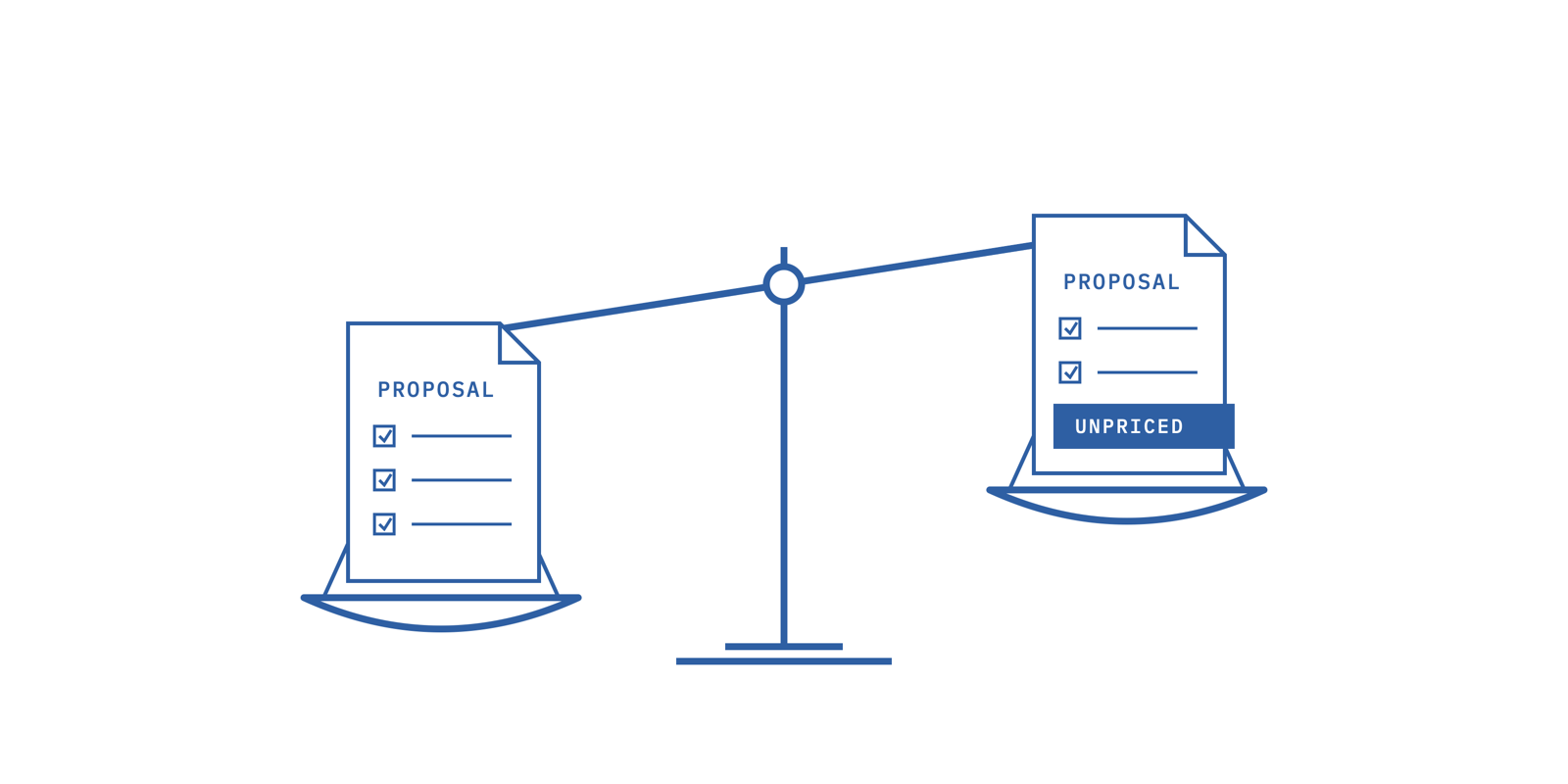
Compare custom software development proposals against a shared scope, then trace each commitment to its source. Separate included work, conditional work, exclusions and unanswered requirements. Add confirmed costs only once, and keep unpriced exposure visible. Check the evidence behind important promises, preserve every clarification, and request revised commitments before choosing. A tidy scorecard cannot make incomplete bids comparable or prove that a vendor can deliver.
We use a request for proposal to ask suppliers how they would deliver specified work and what they would charge.
The difficult part starts when their answers describe different projects. One proposal includes migration; another assumes your staff will prepare the data. Both promise a working system. Their totals do not reveal the difference.
For a healthcare operator, that ambiguity can land on practice managers already running daily operations. We treat the software development RFP as the reference for comparing commitments.
We will cover the comparison record, pricing differences, evidence checks and clarifications that make a decision defensible.
We Compare Custom Software Development Bids Against One Baseline
We compare a request for proposal by matching each bid to the same work, preserving the original wording and recording unresolved differences. We rank vendors only after identifying which commitments are actually comparable.
Our recommended output is a comparison record that a colleague can check without attending every sales call. A shared spreadsheet and retained proposal files are enough. Buying another procurement tool will not resolve an ambiguous exclusion.
1. Freeze the Work Every Bid Must Cover
We start with the project scope your operating team has agreed to fund. That means workflows, systems, users, boundaries and completion evidence. A list of desired screens is not an adequate comparison basis.
7L International's RFP guide asks buyers to name current systems and versions, describe the business problem, and state exclusions. We use those distinctions to make the baseline specific enough to challenge.
For a practice system integration, we would record the source and destination systems, access already available, data to move, and who resolves rejected records. We would also name the staff responsible for approving the result.
We include non-functional requirements that affect the work, including access restrictions, expected load, recovery expectations and supported devices. The responsible technical reviewers should define the evidence required for these requirements before comparing bids.
We first check if the outcome can come from configuring existing software, changing a process or connecting systems already in use. A request for a custom build should explain what those alternatives leave unresolved.
Once that decision is made, we give the baseline a version and date. Every proposal must identify the version it answers. A later change to the requested work becomes an explicit amendment, not a quiet edit to the comparison sheet.
We keep broad partner-selection questions in a separate review. Our guide to choosing a software development company covers that decision. Here, the task is to establish what each specific offer buys.
2. Keep the Original Promise Beside the Comparison Row
We recommend retaining the source statement alongside your interpretation. Otherwise, a reviewer can accidentally turn an assumption into a promise while shortening a paragraph for the spreadsheet.
Our comparison record uses these fields. The purpose is traceability, not paperwork volume.
| Field | What We Record | What It Prevents |
|---|---|---|
| Requirement and baseline version | The requested work and the version every bidder received | Comparing different releases as if they were identical |
| Proposal source | File version, page or section, and relevant wording | Losing the distinction between a written promise and a sales explanation |
| Inclusion state | Included, conditional, excluded or unanswered | Treating silence as agreement |
| Price treatment | Included amount, confirmed adjustment, allowance or unpriced exposure | Counting the same work twice or assigning an invented cost |
| Dependency and owner | Required client input, third-party access and accountable person | Assuming someone else will supply missing work |
| Completion evidence | Deliverable and acceptance criteria | Paying for an activity without an agreed result |
| Latest confirmation | Dated clarification and the document it replaces | Evaluating a promise that is no longer current |
We split a row when it contains independently priced or accepted work. Data migration may need separate treatment for extraction, mapping, cleanup, loading and verification. We do not split merely to make the sheet look detailed.
We also preserve the boundary between a bidder's statement and our interpretation. If the proposal does not identify who cleans source data, the row says unanswered. It does not say client responsibility because that seems likely.
Pro tip: We put the source page or section beside the inclusion state. A reviewer should be able to challenge the interpretation without searching the whole proposal.
3. Separate Confirmed Prices From Unpriced Exposure
We do not use a guessed contingency to make an incomplete bid look complete. We distinguish confirmed monetary adjustments from work whose scope or price remains unknown.
The Write Direction's software RFP guide recommends pricing attachments and objectives with acceptance criteria. We extend that into a clear rule for the comparison. Every adjustment needs an identifiable piece of work and a documented pricing basis.
| Bid State | Our Treatment | What Must Happen Before It Becomes Comparable |
|---|---|---|
| Included and sufficiently defined | Retain the quoted amount without adding it again | Confirm the same deliverable and acceptance boundary |
| Included subject to an assumption | Keep the condition visible beside the price | Validate the assumption or obtain its revised commercial treatment |
| Excluded but required | Record it as a missing baseline item | Obtain a price or make an explicit, funded decision about another provider |
| Included through an allowance | Preserve the allowance and its limits | Establish what consumes it and how excess work is handled |
| Unanswered or contradictory | Leave the item unresolved and unpriced | Obtain a written clarification |
Consider a hypothetical migration row, not a client case. One bidder includes import and validation but assumes that the practice supplies clean source data. Another includes cleanup and import but says nothing about validation.
We cannot compare those promises by marking both as migration included. We need separate answers about cleanup ownership and validation evidence. The first total excludes an operational burden; the second lacks a completion commitment.
We ask each bidder to confirm the missing boundary before adding anything to its price. If cleanup already sits inside an allowance, adding a separate cleanup estimate could count it twice.
Our comparison can show a quoted subtotal plus confirmed adjustments. We label it as a subtotal while material exposure remains unpriced. We do not label the lowest subtotal the lowest total cost.
For custom software development, we want that commercial boundary tied to the actual operating work.
4. Preserve the Basis of Each Pricing Model
We compare what the price commits to before comparing the amount. A fixed-price contract and time and materials can describe different allocations of uncertainty, even when their initial estimates look similar.
The Write Direction guide distinguishes stable, defined work from discovery-heavy work when discussing these models. We would keep the following differences visible in the pricing template.
| Pricing Basis | What We Need to Compare | What We Would Not Assume |
|---|---|---|
| Fixed-price contract | Defined deliverables, exclusions, assumptions and change treatment | That a fixed total includes every requirement you intended |
| Time and materials | Proposed roles, rates, allocation, estimated effort and approval controls | That an effort estimate is a binding maximum |
| Time and materials with a ceiling | What the ceiling covers and what happens when it is reached | That a ceiling guarantees the entire outcome |
| Separately priced discovery | Deliverables, decision at the end and basis for a later build proposal | That paying for discovery commits you to the full build |
We also separate initial delivery from ongoing obligations. Hosting, software licenses, maintenance and support need a common comparison period chosen for the business decision. A multi-year total is useful only when its assumptions are visible.
We ask what happens when usage, interfaces or support hours change. A low recurring amount can be impossible to interpret without the volume and service boundary it assumes.
We do not choose a winner through a formula that mixes confident prices with unsupported guesses. Finance can model scenarios, but the decision record should identify their assumptions and keep them separate from vendor commitments.
5. Trace the Change Before Ranking the Bids
We finish the comparison by checking that each material row has a current answer. A bidder may resolve an exclusion through a clarification, but that answer needs to identify the price and proposal version it changes.
We retain the original entry and mark the newer commitment as superseding it. Deleting the old wording makes it harder to explain why the evaluated price or scope changed.
Our release rule is simple. No material required item can silently become a zero-cost assumption. It must be confirmed, explicitly assigned elsewhere with an accepted cost basis, removed from the shared scope, or left unresolved.
We agree evaluation criteria before reviewing the final ranking. Technical fit, delivery evidence and commercial terms still require judgment. The comparison record makes that judgment inspectable; it does not replace it.
Require Evidence for the Work Named in the Request for Proposal
We ask for evidence that matches the work in the request for proposal, including its systems, boundaries and proposed delivery team. A general capability claim does not answer a requirement for this project.
Our published Apex Dental Partners case study describes reporting, payroll, time management and access across a dental group. We use that published scope to make the comparison concrete. It does not establish a particular bidding result.
1. Test the Proposed Workflow With Its Actual Boundaries
We would ask the proposed team to demonstrate a representative workflow with non-sensitive test data. For a multi-location practice, that includes the relevant roles, location boundaries and failed transactions, not only the successful path.
We write the expected result before the demonstration. Then we retain what happened, what the demonstration omitted and which questions remain open. Our guide to user acceptance testing for founders explains the broader acceptance task.
For development security, we can use NIST's Secure Software Development Framework to structure supplier questions. NIST describes it as a common vocabulary for purchasers and suppliers. We ask for relevant practices and artifacts; we do not treat the framework's name as a certification.
We keep specialist review attached to the relevant requirement. A product demonstration cannot establish contractual rights, and a security document cannot prove that the proposed integration will work.
2. Read Vendor Guidance Without Treating It as a Bid
We found useful public guidance from competing providers during research on October 26, 2026. These pages describe how to prepare an RFP; they are not commitments to deliver your project.
| Published Guidance | Useful Input We Observed | What the Actual Bid Still Needs |
|---|---|---|
| 7L International | Current-system detail, exclusions, response format and evaluation criteria | Answers tied to your baseline and proposed team |
| TechMagic | Scope, QA, documentation, development approach and budget structure | Specific deliverables, price boundaries and completion evidence |
We would apply the same evidence standard to every bidder. Our code ownership guide provides additional context for the handover questions to resolve with the appropriate reviewers.
Pro tip: We label evidence with the requirement it supports and the scope it does not cover. A polished artifact should not receive credit for unrelated promises.
Close Material Gaps Before You Select a Proposal
We select a proposal only after material request for proposal gaps are resolved or explicitly accepted by the person responsible for the consequence. A high score does not close an unanswered requirement.
1. Run a Documented Clarification Round
We send the same baseline amendments to all remaining bidders, while keeping each bidder's confidential material separate. Each clarification identifies the requirement, the uncertain statement and the decision the answer must support.
For migration, we would ask who profiles the source data, who corrects rejected records, what evidence demonstrates completion and how additional work changes the price. We would request a revised scope and price together if the answer changes either.
We set a response deadline that fits the actual procurement schedule and the work needed to answer. A request that requires examining source data needs access and review time; demanding an immediate fixed quote does not remove the uncertainty.
We retain a dated clarification log and incorporate accepted commitments into the final agreed documents with the relevant commercial and legal reviewers. A useful answer should not remain stranded in meeting notes.
2. Record Why the Decision Still Holds
We write down the unresolved conditions that could change the decision. Missing interface access, unclear cleanup responsibility or unavailable delivery staff can matter more than a small difference in the quoted subtotal.
We then ask the accountable reviewer to resolve each condition, accept its consequences or defer the affected commitment. If the information needed to compare proposals does not exist, a defined discovery engagement may be the next decision.
We would specify what discovery must establish, who can use its outputs and what decision follows it. We would not present discovery as a guarantee that the eventual build fits an earlier estimate.
We keep the final decision record short. It names chosen scope, evaluated cost basis, supporting evidence, accepted uncertainties and named decision owners. It should explain the choice to someone who did not attend the demonstrations.
We also preserve the limits of the exercise. A complete comparison does not prove delivery capability or eliminate implementation risk. It establishes a clearer basis for the commitment your business is making.
Compare the Commitments Before You Commit the Budget
We use the request for proposal to keep scope, prices and evidence attached to the same decision. Start with the required work, retain the original promises and refuse to hide unknowns inside a neat total.
Before approving custom software development, we would close the material differences and record the uncertainty the business accepts. The useful result is a commitment you can explain and revisit. You can bring that scope and its open questions to Better Software.
Frequently Asked Questions
What is RFP vs RFQ?
We use a request for proposal to ask how a supplier would solve a need. A request for quotation asks for prices on a defined purchase. We choose the form around the buying decision, since these documents serve different purposes.
What is an RFP vs RFI?
We use a request for information to learn what suppliers and approaches are available before issuing a request for proposal. It supports market exploration. We would keep that exploratory stage separate from asking vendors to prepare a specific offer for a defined purchase.
How much does an RFP cost?
We budget staff time, scope work, review and any outside help used to prepare the request for proposal. We ask for an estimate tied to those tasks. Our research does not establish a standard fee that would apply to every buyer.
Who requests an RFP?
We expect the buyer to issue the request for proposal through a person who has authority to do so. That may be a buying team or business lead. We check the firm's approval rules before asking suppliers to prepare their offers.
Are RFPs a waste of time?
We would skip a formal request for proposal if the organization has already made its choice and cannot genuinely consider alternatives. We would also question its value for a simple repeat purchase. The process earns its place when there is a real sourcing decision to make.
About the author

Better Software Team
Product and engineering team
Better Software Team is the product and engineering team at Better Software. We build new software products and improve existing applications and systems, with deeper experience in healthcare, finance and energy.