Operations
How Do You Track Appeal Deadlines in Revenue Cycle Management Software?
Quick Answer
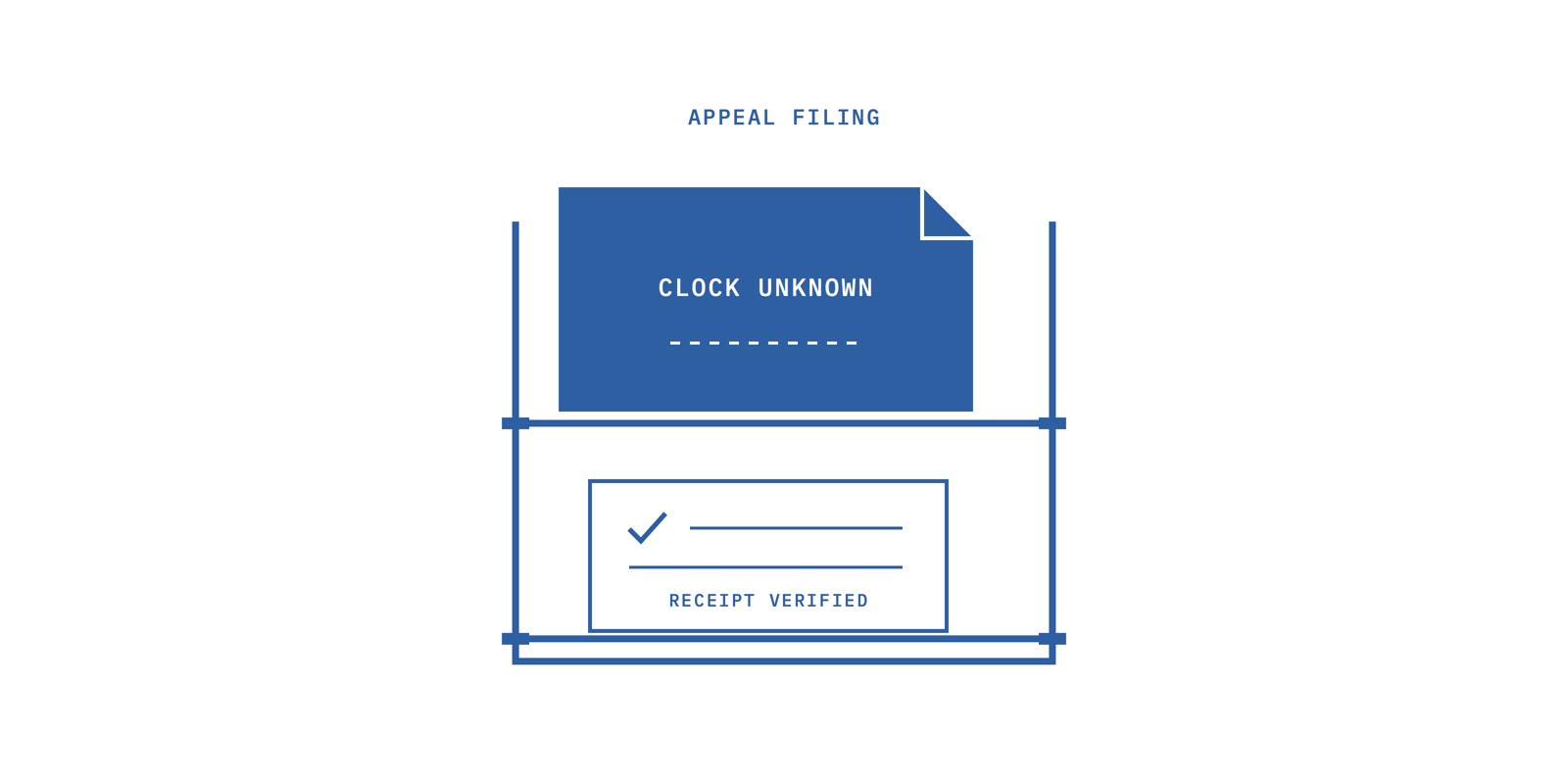
Track appeal deadlines by reconciling incoming denials, assigned work and filing evidence across every office. Revenue cycle management software should keep unknown clocks, missing owners and unsupported closures visible. Attach each deadline to its governing rule and source event, then verify filing evidence before removing a case from the deadline queue. Test missing records and duplicate receipts before expanding the workflow, and configure existing tools first.
We treat an appeal as a formal challenge to a decision denying payment for care. The operational problem starts when a denial reaches an office but never reaches the person responsible for that challenge.
A tidy dashboard can hide that missing work. Sorting existing tasks by due date cannot reveal a task that was never created. Nor can it explain a blank deadline that someone excluded from the report.
For a US medical-group owner, we would make coverage visible before buying another dashboard. This guide covers the source records, clock evidence, handoffs and an executable control for finding appeal work that disappeared.
Keep Every Appeal Accounted for From Notice to Filing
We would track each appeal by reconciling the original denial, its work item and its filing evidence. A case stays visible until the team can support its current disposition, including a documented decision that an appeal is inappropriate.
That is a different task from identifying why a location creates denials. Our article on which location caused a denial covers upstream attribution. Here, we focus on keeping the resulting work from losing its filing window.
1. Start With the Denial Population Outside the Work Queue
We would inventory each intake channel before reviewing task counts, including remittance advice, payer notices, portal downloads and correspondence handled by local offices. Each source needs an owner and a record of the period its latest export covers.
The distinction between a source record and a task matters. If both sides of a completeness check come from the appeal queue, they can agree while an entire office's incoming work remains absent.
We would preserve a reference to the originating document and assign a stable identifier to the appeal episode. A claim identifier alone is insufficient for our proposed control because the same claim can enter another appeal level or receive a separate determination.
The identifier should distinguish those episodes without exposing patient information in a management report. An analyst can keep the link back to the authorized source system while the owner reviews an opaque case reference and an exception category.
The CMS appeal tracking sheet records actions, dates, contacts, next-step deadlines and copies. We would retain that evidence discipline while connecting records across offices.
We would also reconcile export coverage separately. A report cannot identify a denial that never arrived in its input. A successful import job is therefore insufficient evidence that every expected office and channel supplied its records.
For each reporting period, we would record expected sources, received sources and unresolved gaps. An unavailable portal export stays on the exception list until a responsible person checks it; it does not become a zero-denial day.
2. Keep the Appeal Clock Attached to Its Rule and Trigger
We would store the payer, product, applicable contract, appeal route and appeal level alongside the payer-specific rule reference. The responsible reviewer should confirm the appellant's standing and the procedure before accepting a calculated date.
That reviewer also needs the event that starts the clock. The notice date, evidenced receipt date and local entry date describe different events. We would retain them separately rather than substitute the day a staff member opened the task.
A specific official example shows why this distinction matters. For an Original Medicare first-level redetermination, CMS states that an appellant has 120 days from receipt of the initial determination.
CMS presumes receipt five calendar days after the notice date unless contrary evidence exists. We checked that guidance on October 20, 2026. We would not apply those values to another payer, another process or another appeal level.
For that first-level request, CMS directs the appellant to the Medicare Administrative Contractor that made the initial determination. We would retain that destination with the appeal record.
The same CMS guidance distinguishes redetermination from correction of minor errors and omissions. We would have qualified billing staff choose the route before asking software to calculate the deadline. A routing error cannot be repaired by a more frequent reminder.
Our proposed record holds the rule reference, evidence for the triggering event, reviewed deadline, reviewer and review date. If the rule or trigger is unresolved, we would display a missing-clock exception immediately.
We would keep an earlier internal action target separate from the external filing cutoff. The internal target gives staff room to obtain documents and resolve submission problems; it must not replace the date whose basis the reviewer approved.
A request for more information or a repeated submission should prompt a rule review, not an automatic clock reset. We would preserve the previous date and the reason for any approved change so an audit can reconstruct what staff knew.
3. Transfer Responsibility With an Acknowledged Handoff
We would assign an appeal to a named owner, an available backup and a next action. The originating office remains a separate field, so moving work to a central team does not erase where supporting information must come from.
A handoff needs acceptance by the receiving person. Until that happens, we would keep the sending owner accountable and expose the unaccepted transfer to a supervisor. Sending a notification does not establish that anyone accepted the work.
This is a process recommendation, not a claim about a particular platform. The AHIMA denial-resolution guide supports assigning responsibility and deadlines that comply with payer requirements. We would turn that responsibility into observable workflow states.
We would review unresolved clocks, unaccepted transfers and missing next actions separately from ordinary dated work. Otherwise, a report sorted only by deadline can give the most uncertain cases the least attention.
The same principle applies when staff leave or change roles. We would test reassignment against active appeal episodes, retain the previous owner in history and require the replacement owner to acknowledge the remaining work.
For a group with several offices, the useful management question is concrete. Which appeal lacks an accountable person or a supported clock today? A consolidated total of open tasks cannot answer it.
4. Require Evidence Before the Appeal Leaves the Filing Queue
We would distinguish an outgoing attempt from filing evidence accepted under the applicable procedure. The record should connect the episode, destination, submission package and confirmation reference, with timestamps the reviewer can check.
A receipt for another claim or another appeal level must not satisfy the check. Nor should an unreviewed screenshot automatically establish timely filing. The responsible team must decide what the governing process accepts as evidence.
Waystar's public description includes appeal tracking and proof of delivery. That is a vendor statement about capabilities. We would still ask the team to demonstrate how its own configuration connects evidence to the correct episode.
We would preserve attempts that fail, receive rejection or lack confirmation. Removing those attempts would make the record look cleaner while weakening the evidence needed to investigate what happened.
A reviewed decision not to appeal also needs a source reference and an accountable approver. We would retain that decision separately from an unresolved route. An empty task list should never imply that staff evaluated every denial.
Finally, filing ends only the filing task. We would keep the appeal's subsequent follow-up and disposition in the operational workflow. A receipt does not establish a favorable decision or payment.
Make Revenue Cycle Management Software Prove Appeal Coverage
We would ask an analyst to run an independent, read-only appeal coverage check from source intake. The contribution here is a reproducible query with explicit missing-value checks, rather than another recommendation to centralize a tracker.
1. Compare Intake, Work Items and Filing Evidence
Our reference SQL expects three prepared tables. denial_intake contains one row per appeal episode and its source reference. appeal_work contains at most one current work row for that same episode.
filing_evidence may contain several receipts per episode. Its valid_for_rule value represents a human-reviewed determination about the evidence; the query cannot make that determination itself.
We would reject duplicate intake or work identifiers before running the query. We would also normalize blank dates to null and validate all timestamps into the same UTC ISO 8601 representation.
The analyst supplies the as-of timestamp in that same representation. action is pursue, no_appeal or an unresolved value such as review. A closure_ref points to a reviewed decision, including its approver and rationale.
WITH coverage AS (
  SELECT i.episode_id,
    w.episode_id IS NULL AS missing_work,
    COALESCE(w.action, '') NOT IN ('pursue', 'no_appeal') AS unresolved_route,
    w.action = 'no_appeal'
      AND COALESCE(TRIM(w.closure_ref), '') = '' AS unsupported_closure,
    w.action = 'pursue' AND (
      COALESCE(TRIM(w.rule_ref), '') = '' OR
      COALESCE(TRIM(w.trigger_ref), '') = '' OR
      w.due_at IS NULL
    ) AS missing_clock,
    w.action = 'pursue' AND (
      COALESCE(TRIM(w.owner_id), '') = '' OR
      w.next_action_at IS NULL
    ) AS missing_accountability,
    w.action = 'pursue' AND w.due_at <= :as_of
      AND NOT EXISTS (
        SELECT 1 FROM filing_evidence e
        WHERE e.episode_id = i.episode_id
          AND e.valid_for_rule = 1
          AND COALESCE(TRIM(e.receipt_ref), '') <> ''
          AND e.received_at <= w.due_at
      ) AS past_due_unverified
  FROM denial_intake i
  LEFT JOIN appeal_work w ON w.episode_id = i.episode_id
)
SELECT * FROM coverage
WHERE missing_work OR unresolved_route OR unsupported_closure
   OR missing_clock OR missing_accountability OR past_due_unverified;
We start from intake so a missing work row survives the comparison. The independent flags preserve several problems on the same episode, instead of hiding everything behind the first matching reason.
The receipt check uses NOT EXISTS, so extra copies of a valid receipt cannot multiply the case count. A receipt must match the episode, carry a reference, be reviewed as valid and fall within the recorded deadline.
This is a coverage query, not a deadline calculator or a clinical decision system. We would validate rule interpretation, timestamp quality and source completeness outside it. It also leaves ordinary future-dated work to the operational task queue.
A blank result means only that these particular checks found no exception in the supplied snapshot. It does not prove that a missing source feed arrived or that a reviewer interpreted a contract correctly.
2. Challenge the Appeal Report Before Trusting It
We would test the query in an isolated copy with controlled records, without changing live claims. If we remove a work row, its intake episode should appear as missing work. If we remove a deadline, the episode should appear as missing clock evidence.
If we duplicate a receipt, the output should not duplicate the episode. If we change that receipt's episode identifier, it should stop satisfying the original episode's filing check. If we remove the owner, accountability should fail independently of filing evidence.
We would also mark an episode no_appeal without a decision reference and require an unsupported-closure exception. Then introduce an owner gap and a late unverified filing together; both flags should remain visible.
Those are proposed acceptance conditions, not patient examples or promises about recovery. Our broader user acceptance testing guide explains how to make observed behavior the acceptance criterion.
We would retain the input snapshot, test changes, expected flags and actual output. If a known missing record disappears from the report, we would fix the control before trusting its apparent completeness.
Configure Existing Appeal Controls Before Commissioning Software
We would first configure the appeal controls already available in the group's revenue cycle management software. Custom work becomes a candidate only when a specific cross-source gap remains after the team demonstrates its existing workflow.
1. Ask Vendors to Demonstrate the Same Appeal Cases
We would ask each denial appeal platform to demonstrate the same episodes, rather than compare feature names. Public product descriptions establish what to ask about; they do not establish how a configured implementation performs.
| Option | Publicly Described Scope | What We Would Verify |
|---|---|---|
| Waystar Denial + Appeal Management | Appeal tracking, proof of delivery and exception-based workflows | Evidence remains tied to the episode and unresolved cases remain visible |
| Rivet Denials Management | Payer instructions, forms, task lists and deadline tracking | Local payer rules and office handoffs survive the configured workflow |
| An independent coverage report | A control the group defines over approved exports | Intake gaps and unsupported closures appear even when the main task queue looks complete |
Waystar and Rivet supplied those public descriptions. We have not tested their products or measured their results.
We would scope revenue cycle management software work around a demonstrated missing control, with the billing team approving the rule inputs and expected behavior before implementation.
2. Keep the Appeal Control Smaller Than the Billing Platform
We would prefer an approved report or integration over rebuilding payer submission infrastructure. The useful output may be a small exception list with an owner and source evidence, rather than another application staff must maintain.
A cross-office control still needs reliable identifiers, access to approved exports and someone responsible for fixing failed feeds. If those inputs are unavailable, we would address them before commissioning a dashboard.
We would keep patient details in authorized systems and expose only what each reviewer needs. A report containing fewer fields still needs the group's usual access, retention and security review.
We would also keep payer appeal tasks separate from patient collections checkpoints. Resolving a payer decision and managing a patient balance need distinct owners and evidence.
The boundary with prior authorization also matters. Our prior authorization software guide covers a different lifecycle. We would not merge approval inventory, appeal deadlines and clinical review into one ambiguous status.
Prove Appeal Coverage Before Expanding Across Offices
We would begin with a documented set of offices, payers and intake channels, then reconcile every appeal episode in that scope. Assign the rule reviewer, preserve the clock evidence and challenge the report with missing records before widening coverage.
Ask revenue cycle management software to demonstrate those controls against your workflow. Record what remains uncertain and who will resolve it. If the remaining problem needs an integration or a separate coverage check, Better Software can help evaluate that engineering work.
Frequently Asked Questions
How to check status of medicare appeal?
We would use AASIS for an appeal filed with OMHA. In guidance checked October 20, 2026, HHS says its data generally updates weekly and excludes cases closed more than 180 days earlier. We would not treat it as a lookup for every Medicare appeal stage.
What is an appeal status?
For an OMHA appeal, we would read AASIS labels carefully. Assigned names an adjudicator, and Deliberation means a decision is being developed. Combined means cases have joined. We would use the replacement appeal number shown by HHS to look up that case.
How to win a medical appeal?
We cannot promise a win. We would ask trained staff to link the disputed decision to facts in the clinical record. CMS asks for an explanation of disagreement and documents that support it. A deadline alert cannot supply that argument.
How successful are medical insurance appeals?
We would not use one success rate for all appeals. We would group closed cases by payer, appeal level and denial cause. Count wins and partial wins separately. Keep pending cases visible; they are not losses while a decision remains outstanding.
What are the most common claim denial reasons?
We would start with AHIMA’s examples, including missing data, authorization issues, medical necessity, coverage exclusions and duplicate claims. We would count each cause by payer and office in the group’s own records. The order can differ across groups, so a generic ranking would mislead.
About the author

Better Software Team
Product and engineering team
Better Software Team is the product and engineering team at Better Software. We build new software products and improve existing applications and systems, with deeper experience in healthcare, finance and energy.